- +1-707-722-7066
- care@flashtestbio.com
English

Bartonella henselae test kit is a PCR nucleic acid detection reagent kit used to detect Bartonella henselae (B. henselae). Real-time PCR technology has the characteristics of fast, sensitive, highly specific, and high accuracy. Utilizing this technology and the FLASHTEST PCR reagent kit can accurately diagnose whether kittens carry Bartonella henselae (B. henselae).
Canine Gastrointestinal Panel Ⅹ
TOXO (Toxoplasma gondii): An obligate intracellular protozoan parasite (definitive host: cats; intermediate hosts: humans/animals) that causes toxoplasmosis, potentially leading to fetal malformation, neurological disorders, or organ damage in immunocompromised humans and animals.
Cryptosporidium (corrected from "ptosporidium"): A microscopic intestinal protozoan with broad cross-species hosts (humans, livestock, companion animals) that invades intestinal epithelial cells, causing watery diarrhea—severe in infants, the elderly, and immunocompromised individuals.
GIA (Giardia intestinalis/Giardia lamblia): A common intestinal flagellate protozoan transmitted via contaminated water/food (affects humans, dogs, cats, livestock) that adheres to the intestinal mucosa, inducing acute/chronic diarrhea and malabsorption.
P. hominis (Pentatrichomonas hominis): An intestinal flagellate parasite primarily infecting humans (with potential transmission to dogs/cats) that colonizes the large intestine, potentially causing diarrhea, abdominal discomfort, and intestinal inflammation in susceptible hosts.
Heartworms (Dirofilaria immitis): A parasitic nematode transmitted by mosquitoes (definitive hosts: dogs/cats; accidental hosts: humans) that infects the heart and pulmonary arteries, leading to cardiopulmonary disease, heart failure, or even death.
Babesia: A tick-transmitted protozoan (hosts: humans, dogs, cattle, horses) that invades red blood cells, causing hemolytic anemia, fever, and organ dysfunction—with some species (e.g., Babesia microti) posing significant risks to humans.
B. gibsoni (Babesia gibsoni): A specific tick-borne Babesia species mainly infecting dogs (occasionally humans) that causes severe hemolytic anemia, lethargy, and jaundice, often refractory to treatment in severe cases.
Leishmania: A sandfly-transmitted protozoan (hosts: humans, dogs, rodents) that invades macrophages, causing cutaneous, mucocutaneous, or visceral leishmaniasis—visceral form is fatal if untreated.
Leptospirosis (Leptospira spp.): A bacterial infection (spirochetes) transmitted via contact with contaminated urine of infected animals (dogs, cattle, rats) that affects humans/animals, leading to fever, 肝肾 failure, and pulmonary hemorrhage.
B. henselae (Bartonella henselae): A gram-negative bacterium transmitted by cat scratches/bites (primary host: cats) that causes cat-scratch disease in humans (lymphadenitis, fever) and bartonellosis in animals.
Rickettsia: A group of obligate intracellular bacteria (transmitted by ticks, fleas, lice) that infect humans/animals, causing diseases like spotted fever (fever, rash) and typhus, with severe cases leading to organ failure.
Anaplasma platys: A tick-transmitted rickettsial bacterium primarily infecting dogs (rarely humans) that targets platelets, causing thrombocytopenia, fever, and bleeding disorders.
Ehrlichia: A tick-borne rickettsial bacterium (hosts: humans, dogs, deer) that invades white blood cells, causing ehrlichiosis—symptoms include fever, fatigue, and pancytopenia in both humans and animals.
Lyme (Borrelia burgdorferi sensu lato): A tick-transmitted spirochete (hosts: humans, dogs, deer, rodents) that causes Lyme disease, leading to erythema migrans, joint pain, neurological issues, and cardiac complications.
Salmonella spp.: A group of gram-negative bacteria (reservoirs: poultry, pigs, dogs, cats) transmitted via contaminated food/water that causes acute gastroenteritis (diarrhea, fever) in humans and animals, with some strains leading to systemic infection.
Y. enterocolitica (Yersinia enterocolitica): A gram-negative bacterium (reservoirs: pigs, dogs, cats) transmitted via undercooked meat or contaminated food that causes enteritis (abdominal pain, diarrhea) in humans, especially children.
C. jejuni (Campylobacter jejuni): A gram-negative bacterium (reservoirs: poultry, cattle, dogs) transmitted via raw/undercooked meat or contaminated water that is a leading cause of bacterial gastroenteritis in humans (diarrhea, fever, cramps).
HP (Helicobacter pylori): A gram-negative bacterium (hosts: humans, occasionally dogs/cats) that colonizes the gastric mucosa, causing gastritis, peptic ulcers, and increasing the risk of gastric cancer in humans.
SFTSV (Severe Fever with Thrombocytopenia Syndrome Virus): A tick-borne bunyavirus (hosts: humans, livestock, wild animals) that causes severe fever with thrombocytopenia syndrome in humans—symptoms include high fever, thrombocytopenia, and multiple organ failure, with high mortality.
Clinical Application:
Rapid Etiological Diagnosis of Zoonotic Infections: Enables simultaneous, rapid detection of 19 common zoonotic pathogens in clinical samples (e.g., human blood, stool, tissue; animal blood, feces) within hours—significantly faster than traditional methods (culture, microscopy) that take days to weeks. This facilitates early identification of the causative agent for patients/animals with suspected zoonotic symptoms (e.g., fever, diarrhea, anemia), avoiding delayed treatment.
Cross-Species Infection Screening & Zoonosis Prevention: Supports screening of zoonotic pathogens across human and animal hosts (e.g., pet owners, farmers, veterinarians, and their companion animals/livestock). It helps identify transmission links (e.g., a human’s Lyme disease linked to a dog’s tick exposure, or a family’s Cryptosporidium infection from contaminated pet feces), enabling targeted interventions to block cross-species spread.
Precise Pathogen Differentiation & Targeted Treatment Guidance: Accurately distinguishes between closely related pathogens (e.g., Babesia vs. Babesia gibsoni, Rickettsia vs. Ehrlichia) that cause similar symptoms, reducing misdiagnosis and blind medication. By confirming the specific pathogen, it guides clinicians (human medicine) and veterinarians to select optimal antimicrobial/antiparasitic drugs, improving treatment efficacy and minimizing drug resistance.

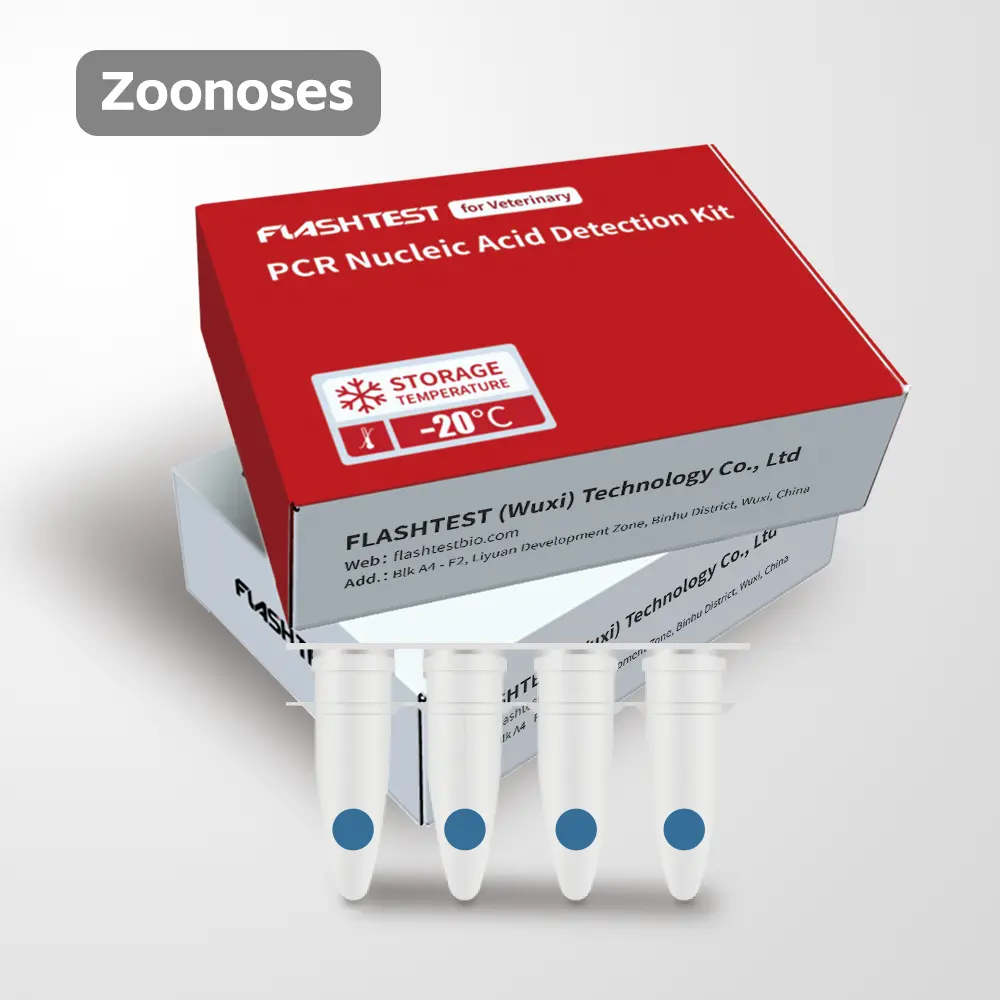
This pet PCR detection reagent screens for pathogens like TOXO、ptosporidium、GIA、P. hominis、Heartworms、Babesia、B.gibsoni 、Leishmania、Leptospirosis 、B. henselae 、Rickettsia、Anaplasma platys、Ehrlichia、Lyme、Salmonella spp.、Y. enterocolitica、C. jejuni、HP、SFTSV. It uses drying technology for room-temperature transport and frozen storage. Other key features include:
Disposable pipettes, no transfer gun needed, simplify workflow
Internal control gene for results validation, no guesswork required
Lyophilized format, ambient temperature stable
Small, flexible packaging is available, in order to suit your needs
| Brand | FLASH TEST |
| Product Name | Zoonoses Panel 19 |
| Product Code/Number | 3014 |
| Specifications | 4Test/ Box |
| Testing Items | TOXO、ptosporidium、GIA、P. hominis、Heartworms、Babesia、B.gibsoni 、Leishmania、Leptospirosis 、B. henselae 、Rickettsia、 Anaplasma platys、Ehrlichia、Lyme、Salmonella spp.、Y. enterocolitica、C. jejuni、HP、SFTSV |
| Testing Targets | DOG |
| Sample Types | Fresh feces, rectal swab + EDTA anticoagulated blood |
| Minimum Detection Limit | 500 Copies/mL |
| Precision | The coefficient of variation (CV, %) of the Ct values is ≤5%. |
| Weight | 0.09kg |





For any inquiries or queries regarding our animal lab test kits and in vitro diagnostic devices, please don't hesitate to reach out to us directly or fill out our online form. We are here to assist you and provide prompt responses to your questions.
Tel:
+1-707-722-7066Email:
care@flashtestbio.comAdd:
Blk A4 - F2, Liyuan Development Zone, Binhu District, Wuxi, China![[3075]Chlamydia/ Mycoplasma](uploads/image/20250112/10/Chlamydia-Mycoplasma-Nucleic-Acid-Test-Kit-Lyophilized.webp "[3075]Chlamydia/ Mycoplasma")
![[3080]Helicobacter pylori (HP)](uploads/image/20250112/10/Helicobacter-pylori-HP-Nucleic-Acid-Test-Kit-Lyophilized.webp "[3080]Helicobacter pylori (HP)")
![[3068]Influenza A/B (Flu A/B)](uploads/image/20250112/10/Influenza-A-B-Flu-A-B-Nucleic-Acid-Test-Kit-Lyophilized.webp "[3068]Influenza A/B (Flu A/B)")