- +1-707-722-7066
- care@flashtestbio.com
English

Test items:
FCoV, FPV, Astrovirus, FeChPV, FBoV-1, FKoV, HP, Salmonella spp., C. jejuni, Y.enterocolitica,T.F., GIA, ptosporidium, P. hominis, Neospora
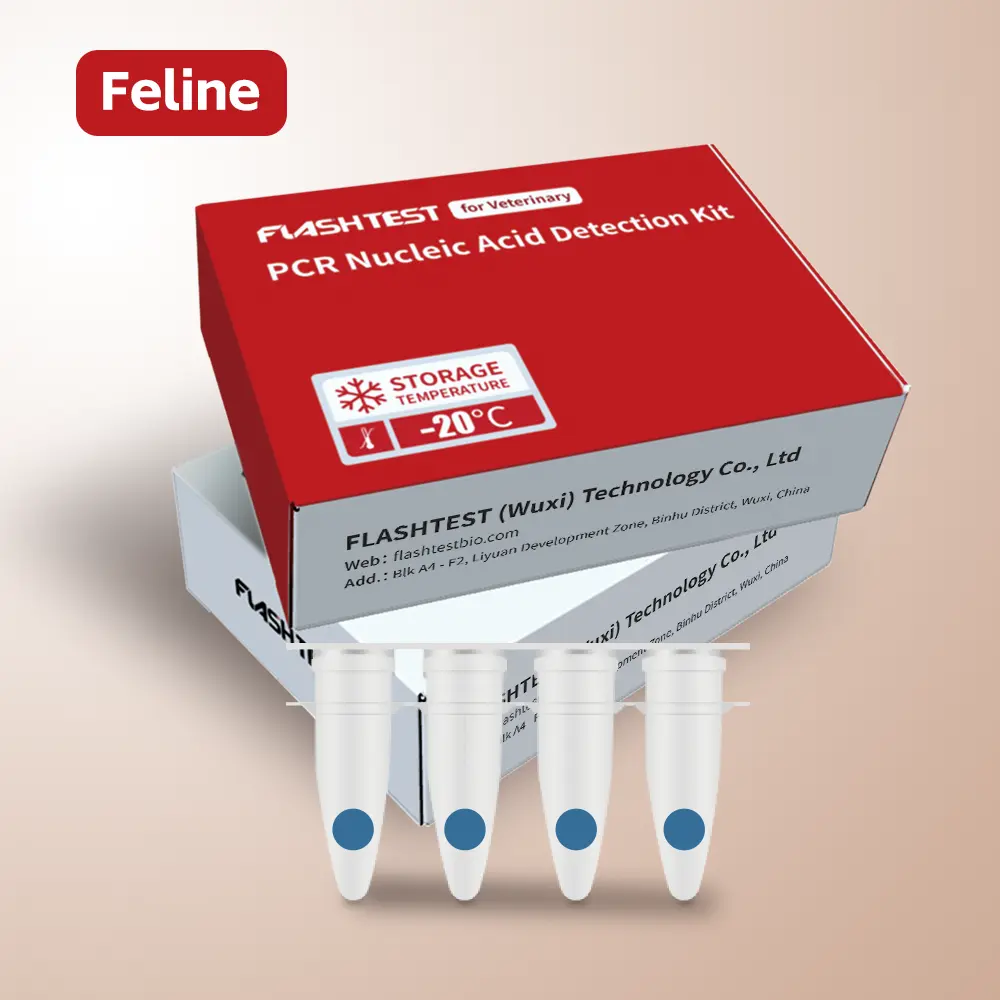
Feline Gastrointestinal Panel 15
FCoV: A common virus in cats that typically causes mild gastrointestinal issues but can mutate into the fatal feline infectious peritonitis (FIP) virus.
FPV: A highly contagious and deadly virus that attacks cats' immune and digestive systems, especially dangerous for kittens.
Astrovirus: A virus that often leads to acute gastrointestinal symptoms like diarrhea and vomiting in cats, particularly young or immunocompromised ones.
FeChPV: A parvovirus-related virus associated with severe gastrointestinal disease and potential lethality in cats, especially kittens.
FBoV-1: A virus linked to respiratory and gastrointestinal illnesses in cats, though its exact pathogenic role is still being studied.
FKoV: A virus detected in cats with gastrointestinal symptoms, though its direct role in causing disease requires further research.
HP: A bacterium that colonizes the human stomach (and occasionally cats) and can cause gastritis, ulcers, and other gastric disorders.
Salmonella spp.: A group of bacteria that can infect cats (and humans) via contaminated food, causing severe gastrointestinal illness with diarrhea, fever, and vomiting.
C. jejuni: A common bacterial pathogen that causes diarrhea, abdominal pain, and fever in cats and humans, often transmitted via contaminated food or feces.
Y.enterocolitica: A bacterium that can infect cats and humans, leading to gastrointestinal symptoms like diarrhea, abdominal pain, and fever.
T.F.: A protozoan parasite that causes chronic, foul-smelling diarrhea in cats, primarily transmitted through direct fecal contact.
GIA: A protozoan parasite that infects cats' intestines, causing diarrhea, weight loss, and malabsorption, spread via contaminated water or feces.
ptosporidium: A microscopic protozoan parasite that causes watery diarrhea in cats (and humans), transmitted through ingestion of contaminated fecal matter.
P. hominis: A protozoan typically found in humans but can occasionally infect cats, potentially causing gastrointestinal discomfort or diarrhea.
Neospora: A protozoan parasite that primarily infects dogs (as definitive hosts) but can cause neurological or reproductive issues in cats (as intermediate hosts) via contaminated food.
Clinical Application:
1. Aids in the accurate and rapid etiological diagnosis of feline gastrointestinal diseases by detecting 15 common pathogenic microorganisms (including FCoV, FPV, Astrovirus, FeChPV, FBoV-1, FKoV, H. pylori, Salmonella spp., C. jejuni, Y. enterocolitica, T. foetus, Giardia [GIA], Cryptosporidium spp., P. hominis, and Neospora) that cause feline gastrointestinal symptoms such as diarrhea, vomiting, abdominal pain, and malabsorption.
2. Helps veterinarians differentiate between infectious gastrointestinal diseases caused by viruses, bacteria, and protozoa, avoiding misdiagnosis due to similar clinical manifestations of diseases induced by different pathogens.
3. Provides a scientific basis for targeted treatment plans – by identifying the specific pathogenic microorganism, veterinarians can avoid blind use of broad-spectrum drugs (e.g., antibiotics) and select appropriate antiviral, antibacterial, or antiparasitic drugs, improving treatment efficacy and reducing the risk of drug resistance.
4. Assists in epidemiological monitoring and prevention in multi-cat environments (e.g., catteries, animal shelters) – early detection of infected cats and identification of pathogenic types help implement timely isolation measures, prevent cross-infection among cats, and formulate effective environmental disinfection and disease prevention strategies.
5. Supports prognosis assessment and follow-up management of feline gastrointestinal diseases – by monitoring the clearance of pathogenic microorganisms through re-testing after treatment, it helps evaluate the effectiveness of treatment and adjust follow-up care plans to ensure the cat's gastrointestinal health is fully restored.
This pet PCR detection reagent screens for pathogens like FCoV, FPV, Astrovirus, FeChPV, FBoV-1, FKoV, HP, Salmonella spp., C. jejuni, Y.enterocolitica,T.F., GIA, ptosporidium, P. hominis, Neospora. It uses drying technology for room-temperature transport and frozen storage. Other key features include:
Disposable pipettes, no transfer gun needed, simplify workflow
Internal control gene for results validation, no guesswork required
Lyophilized format, ambient temperature stable
Small, flexible packaging is available, in order to suit your needs
| Brand | FLASH TEST |
| Product Name | Feline Gastrointestinal Panel 15 |
| Product Code/Number | 3090 |
| Specifications | 4Test/ Box |
| Testing Items | FCoV, FPV, Astrovirus, FeChPV, FBoV-1, FKoV, HP, Salmonella spp., C. jejuni, Y.enterocolitica,T.F., GIA, ptosporidium, P. hominis, Neospora |
| Testing Targets | CAT |
| Minimum Detection Limit | 500 Copies/mL |
| Precision | The coefficient of variation (CV, %) of the Ct values is ≤5%. |
| Weight | 0.09kg |

For any inquiries or queries regarding our animal lab test kits and in vitro diagnostic devices, please don't hesitate to reach out to us directly or fill out our online form. We are here to assist you and provide prompt responses to your questions.
Tel:
+1-707-722-7066Email:
care@flashtestbio.comAdd:
Blk A4 - F2, Liyuan Development Zone, Binhu District, Wuxi, China![[3008]Feline panleukopenia virus (FPV) / Feline Coronavirus (FCoV)](uploads/image/20250111/13/Feline-panleukopenia-virus-FPV-Feline-Coronavirus-FCoV-Nucleic-Acid-Test-Kit-Lyophilized.webp "[3008]Feline panleukopenia virus (FPV) / Feline Coronavirus (FCoV)")
![[3069]Respiratory VII- Cat](uploads/image/20250111/14/Respiratory-VII-Cat-Nucleic-Acid-Test-Kit-Lyophilized.webp "[3069]Respiratory VII- Cat")