English
Email

Mycoplasma agalactiae (M. agalactiae) Nucleic Acid Test Kit (Lyophilized)

This is a PCR nucleic acid detection reagent kit used to detect Mycoplasma agalactiae (M. agalactiae). Real-time PCR technology has the characteristics of fast, sensitive, highly specific and high accuracy. Utilizing this technology and the FLASHTEST PCR reagent kit, it can accurately diagnose whether sheep carry Mycoplasma agalactiae (M. agalactiae).
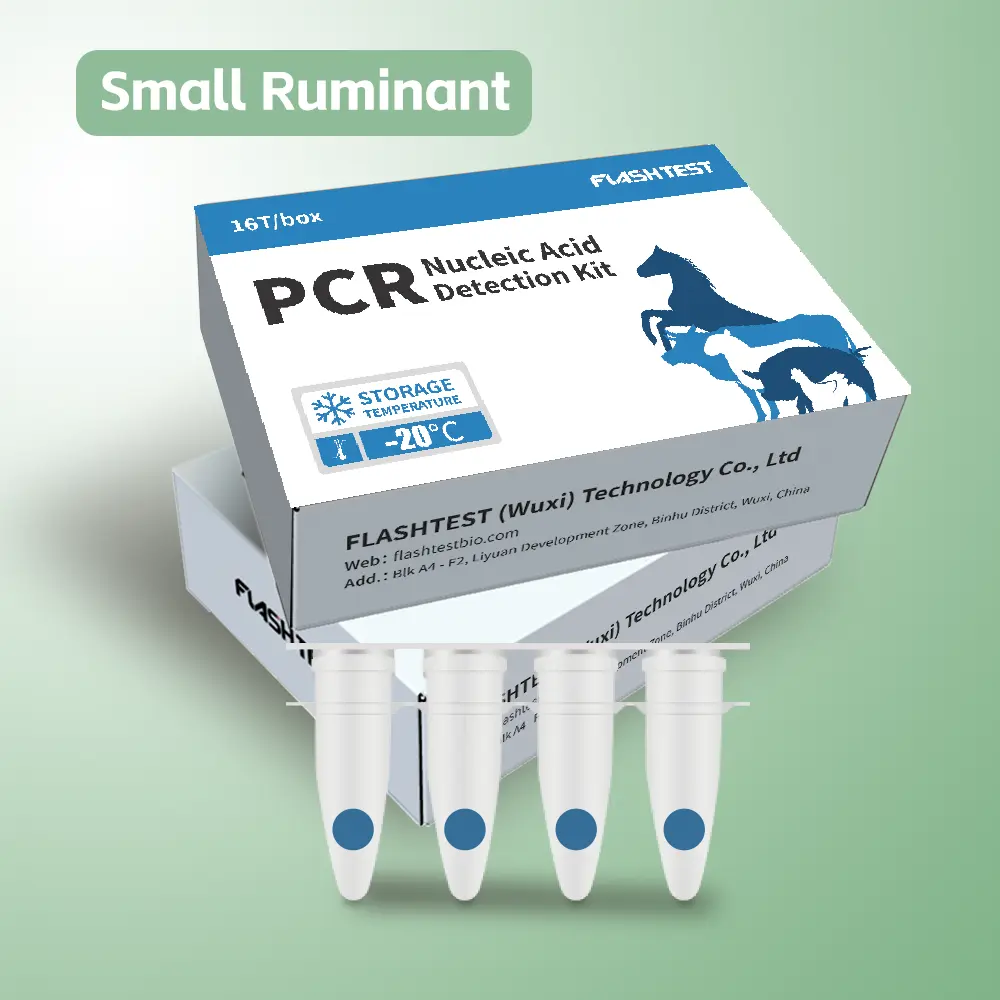
Mycoplasma agalactiae (M. agalactiae) Nucleic Acid Test Kit (Lyophilized).webp

Symptoms 

  • Mammary Gland Involvement:

    • Mastitis: In lactating ewes, this is a primary symptom. The udder becomes swollen, hot, and painful. There is a significant change in milk quality, with the milk turning watery, containing clots or flakes, and a decrease in milk production. In severe cases, the udder may develop abscesses, which can rupture and lead to further complications.

    • Agalactia: As the name implies, infected ewes may experience a complete or partial loss of milk production. This not only affects the growth and survival of the lambs but also has a major economic impact on dairy sheep farming.

  • Arthritis and Lameness:

    • Joint Inflammation: M. agalactiae can infect the joints, causing arthritis. The joints, especially those in the limbs such as the knee, hock, and fetlock joints, become swollen, tender, and stiff. The inflammation can cause damage to the joint cartilage and surrounding tissues over time.

    • Lameness: Sheep with joint infections show obvious lameness. They have difficulty walking, may limp severely, and are reluctant to move or graze. Lameness can lead to reduced activity levels, weight loss, and a decline in overall physical condition.

  • Ocular Symptoms:

    • Conjunctivitis: Infected sheep often develop conjunctivitis. The eyes become red, swollen, and there is a discharge that can be clear or mucopurulent. In severe cases, corneal opacity may occur, which can potentially lead to vision impairment or blindness in extreme cases.


Clinical Applications 

  • Early Detection and Isolation: The M. agalactiae nucleic acid detection reagent allows for the early and accurate identification of the pathogen. Even in the early, pre - symptomatic stages of infection, the reagent can detect the presence of the bacteria. This enables immediate isolation of infected sheep, preventing the spread of M. agalactiae within the flock. For example, in a sheep dairy farm, if a ewe shows a slight decrease in milk production, using this reagent can quickly determine if M. agalactiae is the cause.

  • Herd - wide Screening and Monitoring: Regular screening of the entire sheep flock using the nucleic acid detection reagent is crucial for disease prevention and control. It helps in identifying both clinically - affected and subclinical carriers. Subclinical carriers, although not showing visible symptoms, can still transmit the bacteria to other sheep. By detecting these carriers, appropriate measures such as culling, isolation, or treatment can be implemented to protect the overall health of the flock.

  • Differential Diagnosis: Since the symptoms of M. agalactiae infection can be similar to those of other diseases in sheep, like other mastitis - causing bacteria or other joint - infecting pathogens, the nucleic acid detection reagent plays a vital role in accurate differential diagnosis. Veterinarians can use it to distinguish M. agalactiae from other pathogens, ensuring that the correct treatment and management strategies are adopted.

  • Quarantine and Trade - related Purposes: In the context of sheep trade, both domestic and international, the M. agalactiae nucleic acid detection reagent is used for quarantine purposes. It ensures that the sheep being transported or sold are free from the bacteria, preventing the spread of M. agalactiae across different regions. This is essential for maintaining the health of disease - free areas and safeguarding the sheep - raising industry from economic losses associated with M. agalactiae outbreaks.


16.png


Features of Mycoplasma agalactiae (M. agalactiae)

This farm animals PCR detection reagent screens for pathogens like Mycoplasma agalactiae (M. agalactiae). It uses drying technology for normal temperature transportation and frozen storage. Other key features include:

  • Disposable pipette, stable pipettor, simplified workflow

  • Internal reference genes are used to verify results, eliminating the need for guessing.

  • Freeze-dried form, transported at room temperature

  • Available in small, flexible packaging that can be ordered according to your needs


Specification of Mycoplasma agalactiae (M. agalactiae)

BrandFLASH TEST
Product NameMycoplasma agalactiae (M. agalactiae) Nucleic Acid Test Kit (Lyophilized)
Product Code/Number3317
Specifications16Test/ Box
Testing ItemsMycoplasma agalactiae (M. agalactiae)
Testing TargetsSmall Ruminant
Minimum Detection Limit500 Copies/mL
PrecisionThe coefficient of variation (CV, %) of the Ct values is ≤5%.
Weight0.4kg


Product
Contact With Us
Tel:
+1-707-722-7066
Add:
Blk A4 - F2, Liyuan Development Zone, Binhu District, Wuxi, China

For any inquiries or queries regarding our animal lab test kits and in vitro diagnostic devices, please don't hesitate to reach out to us directly or fill out our online form. We are here to assist you and provide prompt responses to your questions.

Flashtest Blogs
Nov 20-2025
Why Modern Cardiac Troponin T Test Kits Are Essential for Rapid Cardiac Biomarker Screening
Early and accurate identification of cardiac injury has become one of the most critical tasks in emergency departments, outpatient centers, and clinical laboratories. As cardiovascular diseases contin...
Nov 20-2025
Understanding PCR Dog Testing Technology and Its Role in Canine Disease Control
In recent years, molecular diagnostics have reshaped the way veterinarians identify, monitor, and prevent infectious diseases in dogs. Among these diagnostic tools, the PCR dog test stands out as one ...
Nov 20-2025
How Modern Cat Antigen Tests Improve Feline Disease Management
Modern veterinary diagnostics are evolving quickly, and one of the most meaningful advances for pet clinics and cat owners is the improvement of the cat antigen test. As feline viral and bacterial inf...
Home