English
Email

Respiratory Ⅵ - Horse Nucleic Acid Test Kit (Lyophilized)

Test items: EIV, EAV, EHV-1, EHV-4, EK, ES
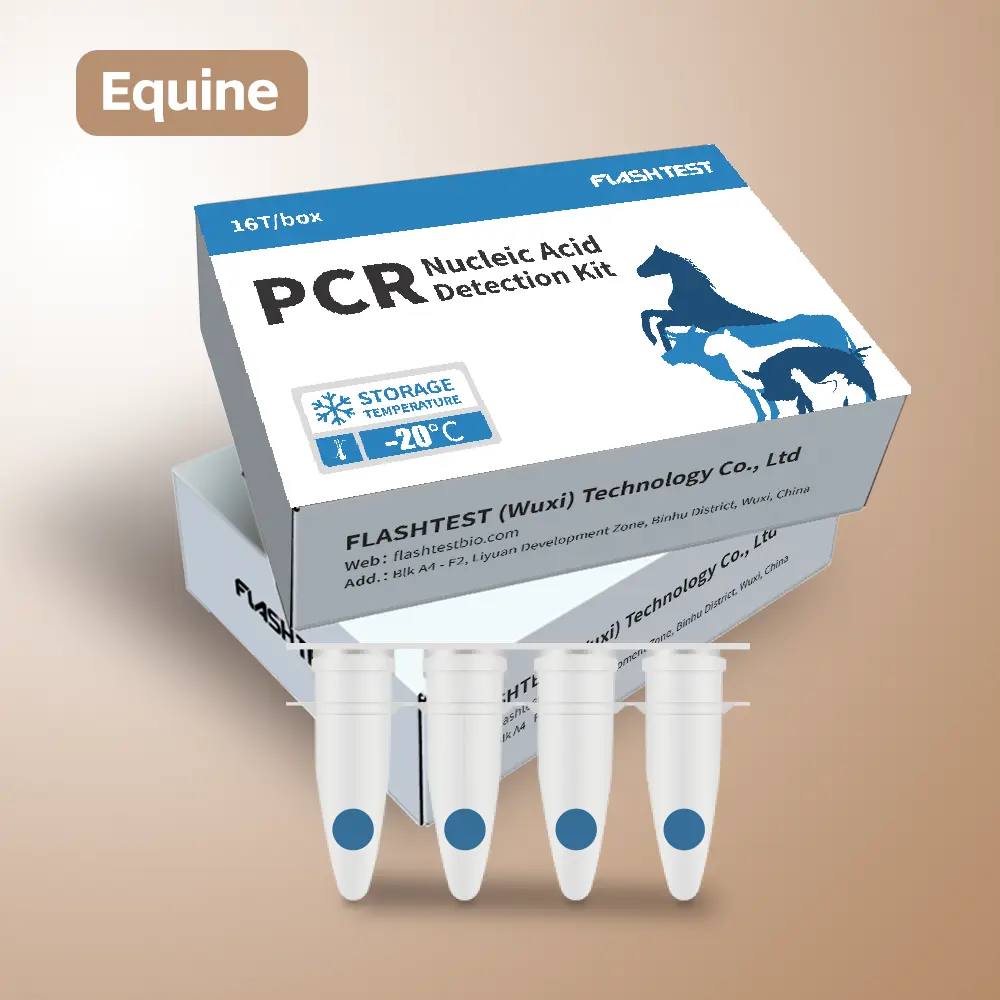
Respiratory Ⅵ - Horse Nucleic Acid Test Kit (Lyophilized).webp
The clinical applications of the 6-item detection reagent for the respiratory tract of adult horses, including Equine Influenza Virus (EIV), Equine Arteritis Virus (EAV), Equine Herpesvirus 1 (EHV-1), Equine Herpesvirus 4 (EHV-4), Klebsiella pneumoniae equi (EK) and Streptococcus equi (ES), are as follows:


  1. Disease Diagnosis
    • Early Diagnosis: It can quickly and accurately identify the pathogens causing respiratory infections in horses, helping veterinarians make early diagnoses. For example, if a horse shows symptoms such as fever, cough, and nasal discharge, the detection reagent can determine whether it is infected with EIV, EHV-1, or other pathogens, enabling timely treatment and reducing the risk of disease progression.

    • Differential Diagnosis: It is used to distinguish between different respiratory pathogens. Since the clinical symptoms of EIV, EAV, EHV-1, EHV-4, EK, and ES infections may be similar, accurate differential diagnosis is crucial. For instance, differentiating between EHV-1 and EHV-4 infections is important as they may require different treatment strategies and isolation measures.

  2. Epidemic Surveillance
    • Outbreak Detection: In horse breeding farms, stables, or equestrian events, regular use of these detection reagents can help detect the early signs of disease outbreaks. If multiple horses test positive for a particular pathogen within a short period, it may indicate the occurrence of an epidemic, allowing for immediate implementation of prevention and control measures to prevent the spread of the disease.

    • Monitoring Disease Trends: By continuously monitoring the prevalence of these pathogens in a specific area or horse population, veterinarians and epidemiologists can understand the changing trends of respiratory diseases in horses, providing a scientific basis for the formulation of prevention and control policies and measures.

  3. Health Management of Horse Populations
    • Entry and Exit Screening: When horses enter or leave breeding farms, competition venues, or are transported across regions, these detection reagents can be used to screen for pathogens. This helps prevent the introduction or spread of infectious diseases and ensures the health of the horse population in the new environment.

    • Routine Health Checks: Regular use of 6-item detection reagents as part of routine health checks can help horse owners and breeders understand the health status of their horses in a timely manner. Horses that test positive for certain pathogens can be isolated and treated promptly, while negative horses can be vaccinated or given preventive medications to enhance their resistance.

  4. Research on Horse Respiratory Diseases
    • Pathogen Research: The detection reagents provide a convenient tool for studying the biological characteristics, genetic variation, and drug resistance of EIV, EAV, EHV-1, EHV-4, EK, and ES. By analyzing a large number of clinical samples, researchers can gain a deeper understanding of the pathogens, which is helpful for the development of new prevention and treatment methods.

    • Epidemiological Research: They are also useful in epidemiological studies to investigate the sources, transmission routes, and risk factors of these respiratory diseases in horses. This information is essential for formulating effective prevention and control strategies and improving the overall health management of horses.


1.png

Features of Respiratory Ⅵ  - Horse

This farm animals PCR detection reagent screens for pathogens like EIV, EAV, EHV-1, EHV-4, EK, ES. It uses drying technology for normal temperature transportation and frozen storage. Other key features include:

  • Disposable pipette, stable pipettor, simplified workflow

  • Internal reference genes are used to verify results, eliminating the need for guessing.

  • Freeze-dried form, transported at room temperature

  • Available in small, flexible packaging that can be ordered according to your needs


Specification of Respiratory Ⅵ  - Horse

BrandFLASH TEST
Product NameRespiratory Ⅵ - Horse Nucleic Acid Test Kit (Lyophilized)
Product Code/Number3701
Specifications4Test/ Box
Testing ItemsEIV, EAV, EHV-1, EHV-4, EK, ES
Testing TargetsEquine
Minimum Detection Limit500 Copies/mL
PrecisionThe coefficient of variation (CV, %) of the Ct values is ≤5%.
Weight0.4kg


Product
Contact With Us
Tel:
+1-707-722-7066
Add:
Blk A4 - F2, Liyuan Development Zone, Binhu District, Wuxi, China

For any inquiries or queries regarding our animal lab test kits and in vitro diagnostic devices, please don't hesitate to reach out to us directly or fill out our online form. We are here to assist you and provide prompt responses to your questions.

Flashtest Blogs
Nov 20-2025
Why Modern Cardiac Troponin T Test Kits Are Essential for Rapid Cardiac Biomarker Screening
Early and accurate identification of cardiac injury has become one of the most critical tasks in emergency departments, outpatient centers, and clinical laboratories. As cardiovascular diseases contin...
Nov 20-2025
Understanding PCR Dog Testing Technology and Its Role in Canine Disease Control
In recent years, molecular diagnostics have reshaped the way veterinarians identify, monitor, and prevent infectious diseases in dogs. Among these diagnostic tools, the PCR dog test stands out as one ...
Nov 20-2025
How Modern Cat Antigen Tests Improve Feline Disease Management
Modern veterinary diagnostics are evolving quickly, and one of the most meaningful advances for pet clinics and cat owners is the improvement of the cat antigen test. As feline viral and bacterial inf...
Home