English
Email

Porcine Circovirus Type 3 (PCV3) Nucleic Acid Test Kit (Lyophilized)

This is a PCR nucleic acid detection reagent kit used to detect Porcine Circovirus type 3 (PCV3). Real-time PCR technology has the characteristics of fast, sensitive, highly specific and high accuracy. Utilizing this technology and the FLASHTEST PCR reagent kit, it can accurately diagnose whether pigs carryPorcine Circovirus type 3 (PCV3).
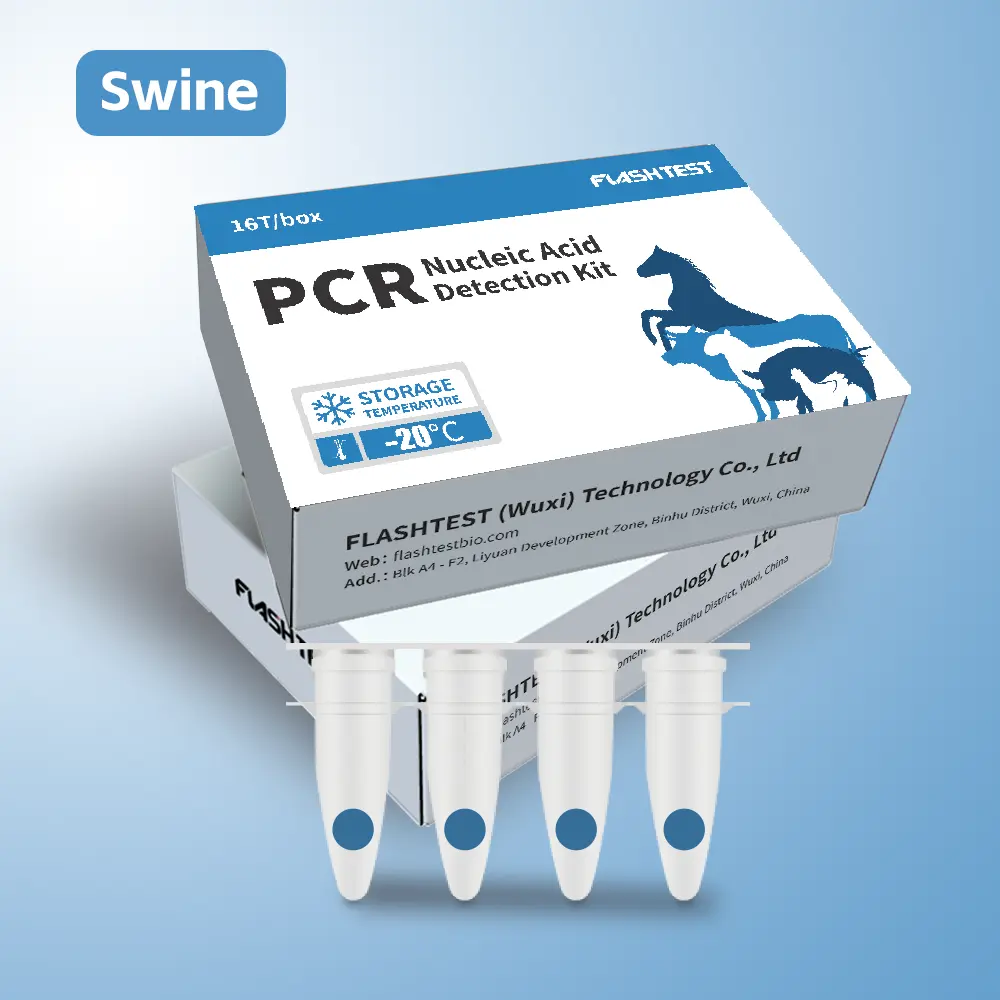
Porcine Circovirus Type 3 (PCV3) Nucleic Acid Test Kit (Lyophilized).webp
Porcine circovirus type 3 (PCV3) is a relatively newly discovered member of the Circoviridae family. Since its identification, it has drawn significant attention due to its potential impact on swine health. PCV3 is a non - enveloped, single - stranded DNA virus with a circular genome. Although its full - scale pathogenicity and the full range of diseases it can cause are still being explored, it has been associated with various clinical manifestations in pigs, including reproductive disorders, respiratory problems, and multisystemic diseases.

The PCV3 nucleic acid detection reagent is developed to precisely detect the presence of PCV3 nucleic acid in swine samples. This reagent typically makes use of advanced molecular biology techniques, most commonly real - time fluorescence quantitative PCR (qPCR). Specific primers and probes are designed based on the unique and conserved regions of the PCV3 genome. During the qPCR process, if PCV3 nucleic acid exists in the sample, the primers will hybridize with the target DNA sequence. As the DNA polymerase synthesizes new DNA strands, a fluorescent signal is generated and amplified. The real - time monitoring of this fluorescent signal by the qPCR instrument enables accurate and rapid detection of PCV3, even when the virus is present in low - level amounts.

Clinical Applications

  1. Early Disease Detection and Diagnosis:In swine farms, when pigs display non - specific symptoms like reduced growth rate, respiratory distress, or reproductive failures, the PCV3 nucleic acid detection reagent can be a crucial tool for veterinarians. By collecting samples such as blood, tissue swabs, or organ tissues from affected pigs and conducting tests with this reagent, early identification of PCV3 infection can be achieved. Early diagnosis is vital as it allows for prompt implementation of appropriate management strategies, including isolation of infected pigs, enhanced biosecurity measures, and adjustment of treatment plans, which can help prevent the spread of the virus within the herd and reduce economic losses.

  2. Herd Health Surveillance:Regular screening of the entire pig herd using the PCV3 nucleic acid detection reagent is essential for maintaining overall herd health. By testing samples from different age - groups and areas within the farm at regular intervals, farmers and veterinary professionals can monitor the prevalence and distribution of PCV3 in the herd. This surveillance helps in early detection of any emerging outbreaks and enables proactive implementation of preventive measures. For example, if a small number of positive cases are detected in a particular group of pigs, immediate actions can be taken to prevent the virus from spreading to other healthy pigs.

  3. Vaccine Research and Development Support:In the development of vaccines against PCV3, the detection reagent plays a significant role. It is used to evaluate the effectiveness of experimental vaccines. After vaccinating pigs with potential vaccine candidates, the reagent is used to test the pigs at various time - points. By measuring the PCV3 viral load in vaccinated pigs, researchers can determine whether the vaccine is able to induce an immune response that reduces or eliminates the virus. This information is crucial for optimizing vaccine formulations and schedules, ultimately leading to the development of safe and effective vaccines to protect pigs from PCV3 infection.

  4. Epidemiological Studies:For epidemiological research on PCV3, the nucleic acid detection reagent is an indispensable tool. It allows researchers to study the spread patterns, genetic diversity, and prevalence of PCV3 in different swine populations across various geographical regions. By analyzing a large number of samples collected from different farms and areas, scientists can gain insights into how the virus is transmitted, identify high - risk areas, and understand the factors contributing to its emergence and spread. This knowledge is essential for formulating comprehensive prevention and control strategies at the regional and national levels.


8.png

Features of Porcine Circovirus Type 3 (PCV3)

This farm animals PCR detection reagent screens for pathogens like Porcine Circovirus type 3 (PCV3). It uses drying technology for normal temperature transportation and frozen storage. Other key features include:

  • Disposable pipette, stable pipettor, simplified workflow

  • Internal reference genes are used to verify results, eliminating the need for guessing.

  • Freeze-dried form, transported at room temperature

  • Available in small, flexible packaging that can be ordered according to your needs


Specification of Porcine Circovirus Type 3 (PCV3)

BrandFLASH TEST
Product NamePorcine Circovirus type 3 (PCV3) Nucleic Acid Test Kit (Lyophilized)
Product Code/Number3208
Specifications16Test/ Box
Testing ItemsPorcine Circovirus type 3 (PCV3)
Testing TargetsSwine
Minimum Detection Limit500 Copies/mL
PrecisionThe coefficient of variation (CV, %) of the Ct values is ≤5%.
Weight0.4kg


Product
Contact With Us
Tel:
+1-707-722-7066
Add:
Blk A4 - F2, Liyuan Development Zone, Binhu District, Wuxi, China

For any inquiries or queries regarding our animal lab test kits and in vitro diagnostic devices, please don't hesitate to reach out to us directly or fill out our online form. We are here to assist you and provide prompt responses to your questions.

Flashtest Blogs
Nov 20-2025
Why Modern Cardiac Troponin T Test Kits Are Essential for Rapid Cardiac Biomarker Screening
Early and accurate identification of cardiac injury has become one of the most critical tasks in emergency departments, outpatient centers, and clinical laboratories. As cardiovascular diseases contin...
Nov 20-2025
Understanding PCR Dog Testing Technology and Its Role in Canine Disease Control
In recent years, molecular diagnostics have reshaped the way veterinarians identify, monitor, and prevent infectious diseases in dogs. Among these diagnostic tools, the PCR dog test stands out as one ...
Nov 20-2025
How Modern Cat Antigen Tests Improve Feline Disease Management
Modern veterinary diagnostics are evolving quickly, and one of the most meaningful advances for pet clinics and cat owners is the improvement of the cat antigen test. As feline viral and bacterial inf...
Home